Custom C2 프레임워크로 레드라쿤 RTL 실습
RTL(Red Team Lite) 강의를 수강하면서 단순히 강의에서 제공하는 툴을 쓰는 것보다 직접 C2 프레임워크를 만들어서 실습해보고 싶었다. 그래서 Rust로 작성한 CloakCat이라는 커스텀 C2 프레임워크를 직접 개발하고, 이걸로 RTL 랩 환경을 공략해보기로 했다.
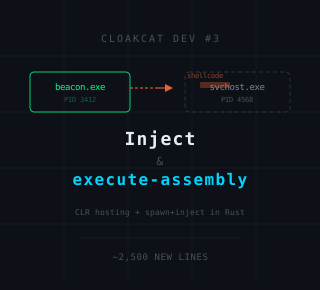
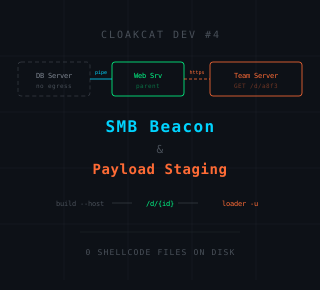
The previous post covered process injection and execute-assembly — the two capabilities that turned CloakCat from a shell-over-HTTP tool into something that could actually support post-exploitation workflows. This post covers the next two pieces: SMB beacon chaining and server-side payload staging. These aren't glamorous features. They don't show up in conference talks. But without them, you hit operational dead ends in any environment with network segmentation or competent blue team monitoring of file artifacts on disk.
The CloakCat vs Cobalt Strike analysis in the previous post surfaced two critical gaps: no process injection, and no execute-assembly. Without these, real red team workflows are fundamentally broken — every post-ex capability runs inside the agent process, and you can't execute .NET tooling in-memory. These were prerequisites before CloakCat could be used for lab work. Phase 10 and Phase 11 were implemented back-to-back.
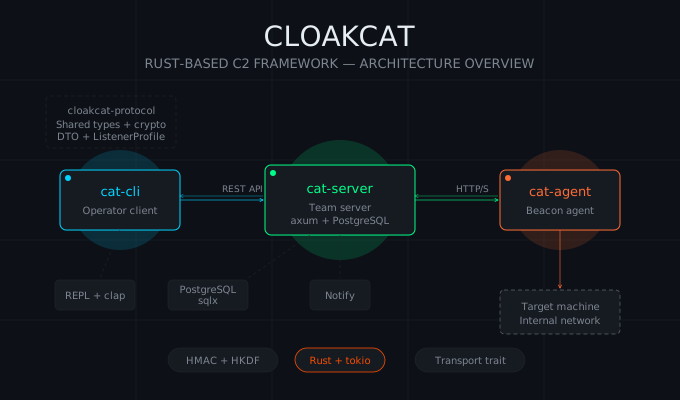
In the [previous post](https://www.cloakcat.com/blog/rust-c2) we covered CloakCat's design philosophy and architecture. With Phase 0 through 8 complete, it's time to ask the hard question: how does it actually stack up against Cobalt Strike, and where does it fall short? 이 글은 감상이 아니라 코드 기반 분석이다. 전체 워크스페이스 ~14,700 LOC를 크레이트별로 뜯어보고, CS의 주요 기능과 1:1로 비교한 결과를 공유한다.
Beginning development of a custom C2 framework — sharing ongoing progress, implementation details, and research findings as the project evolves.